


Bachelor of Aviation
RC
Overview
Take to the skies with Swinburne’s Bachelor of Aviation, Graduate Certificate of Aviation (Piloting)*, a complete package of commercial piloting qualifications designed to fast-track your airline career.
You’ll meet all essential airline entry requirements in one program, training in single- and multi-engine aircraft with no extra modules needed.
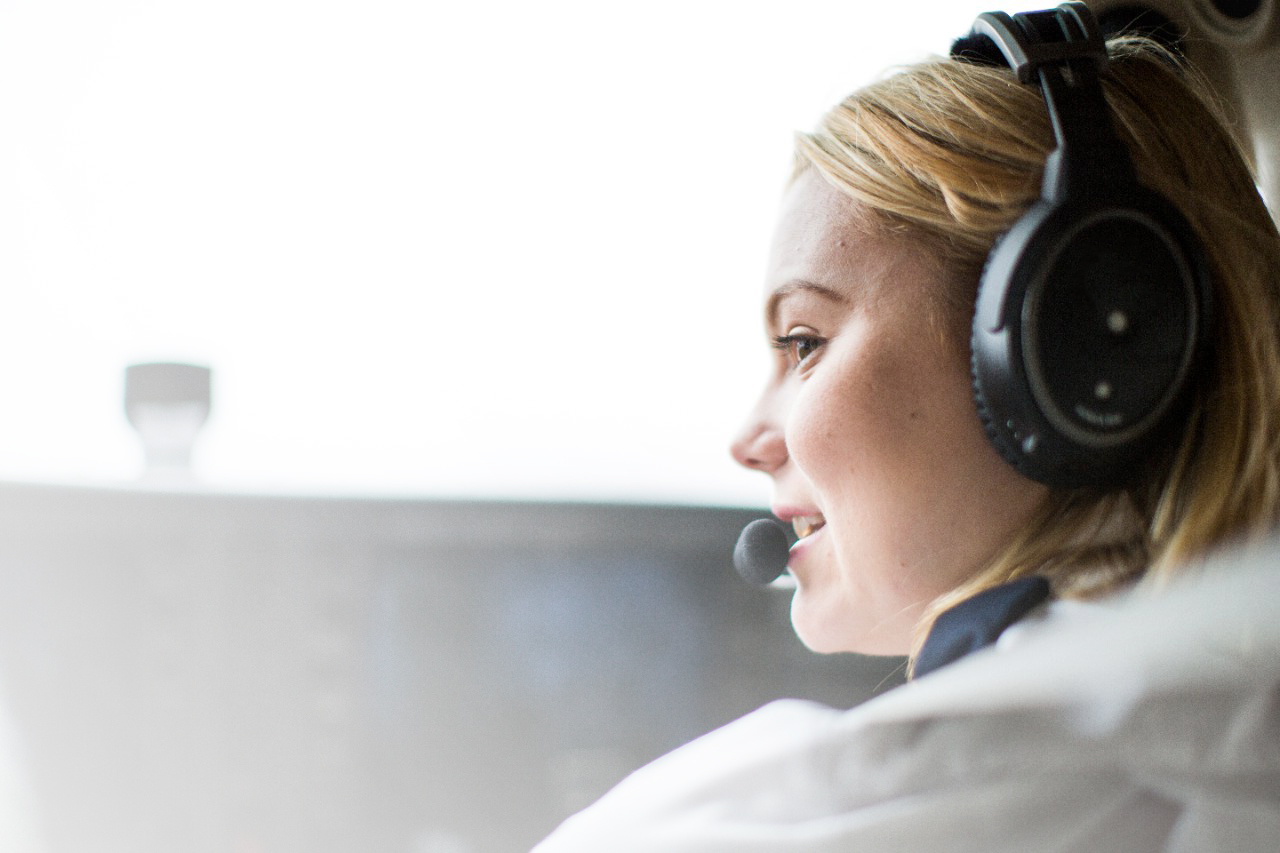
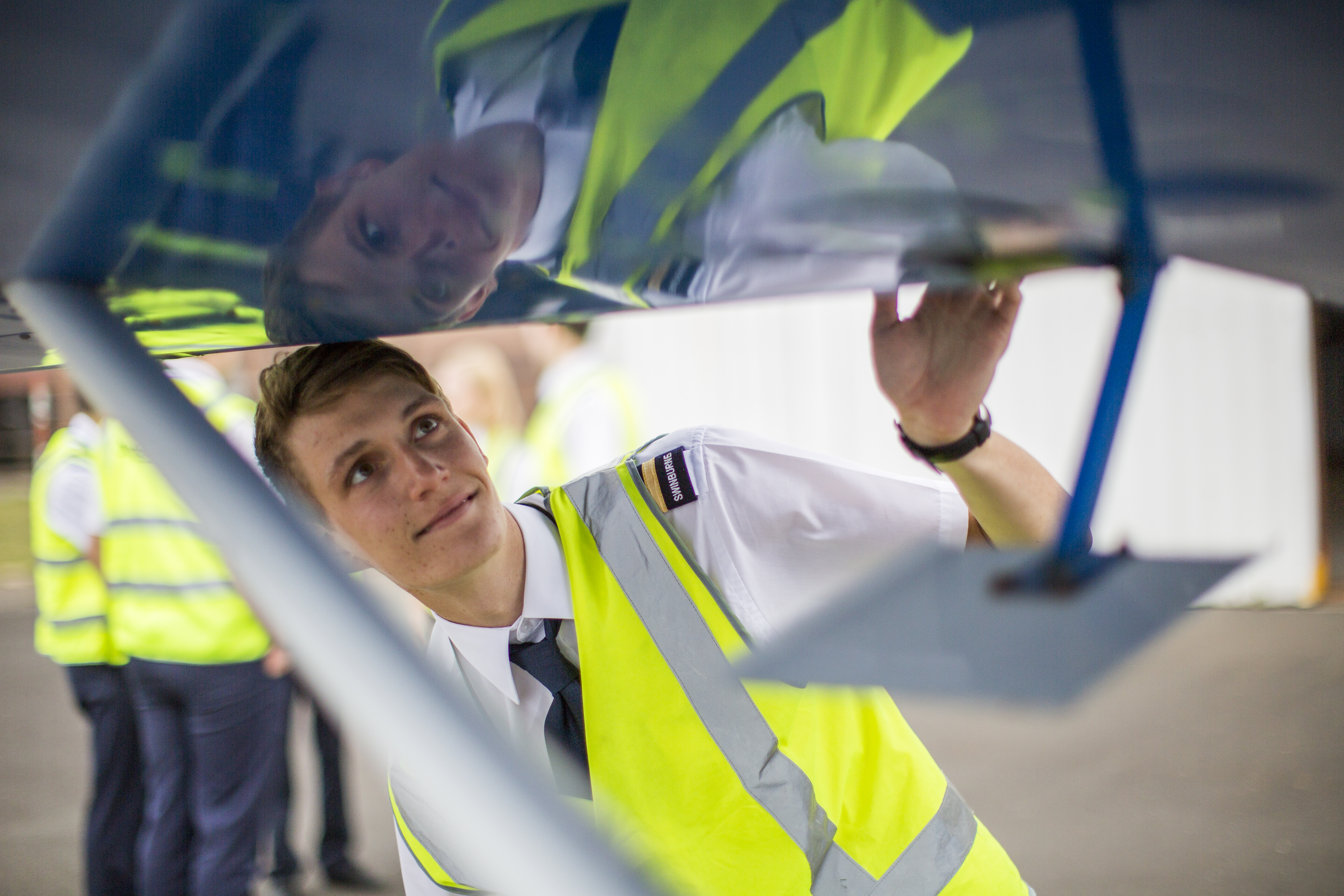
Your flight training takes place at CAE Melbourne Flight Training at Moorabbin. You'll be in the air from week three, flying regularly and sharpening your skills thanks to their large, modern fleet and advanced simulators.
- CAE Melbourne Flight Training is part of the world's largest pilot training network. Aircraft is serviced in-house, meaning less downtime and more flying.
- Swinburne's strong ties to Qantas, Jetstar, AirAsia and China Eastern Airlines ensures training is aligned with airline expectations.
- Experienced airline captains provide mentoring as you take your first steps into the industry.
* The Bachelor of Aviation is undertaken concurrently with the Graduate Certificate of Aviation (Piloting).
Apply ATAR-free and secure your future
The best move you’ll make in Year 12 is not leaving your future to chance. Apply for Swinburne’s Early Entry Program now and you could secure an offer before exams – no ATAR required.
Are you a high school international student in Australia?
The best move you’ll make in Year 12 is not leaving your future to chance. Apply for Swinburne’s Early Entry Program now and you could secure an offer before exams – no ATAR required.
Your industry experience
Build up your CV with real industry experience while you study through our Work Integrated Learning program, which is guaranteed in all our bachelor degrees. In this degree, you’ll work on four projects based on real problems faced by the aviation industry and organisations such as Qantas and Melbourne Airport.
Graduate qualifications
- Commercial Pilot License (CPL)
- Multi-Engine Command Instrument Rating (MECIR)
- Multi-Crew Cooperation and Jet Orientation Course (MCC/JOC) or Flight Instructor Rating (FIR)
- Air Transport Pilot License theory subjects (frozen ATPL)
Skills you’ll learn
- Professional piloting
- Safety risk management
- Human factors understanding
- Teamwork under pressure
- Adaptability and resilience
- Professional workplace skills
Your career opportunities
- Professional pilot
Key codes
International student visa
International students in Australia who hold student visas are required to study full-time and on campus. Courses that are taught entirely online are only available to international students studying outside Australia or those in Australia who are not on a student visa. Online courses are not available to international students in Australia who hold a student visa.
Labs
Discover Swinburne’s aviation facilities, where innovation takes flight with advanced technology and hands-on learning to shape the future of aerospace engineering.
-
Aviation Simulation Lab
Why Swinburne?
30 years connecting graduates to industry
All essential airline pilot qualifications in one packaged program
You’ll be in the air sooner, and more regularly
Access to CAE’s large, modern fleet enriched by simulator experience
Double degrees
Combine your aviation degree with a second degree to gain diverse skills, expand your career pathays, and graduate with two qualifications. Here are some options:
-
"Swinburne is the best option for aviation if you want to get your pilot training and a degree. You get all the qualifications required to work for an airline. It's such a cool thing to be 18 years old and able to fly yourself from Melbourne to New South Wales."
Josh , Bachelor of Aviation
Related courses
-
Graduate Certificate of Aviation (Piloting)
-
Bachelor of Aviation and Piloting
-

Bachelor of Aviation Management
-
Bachelor of Aviation and Piloting
-
Graduate Certificate of Aviation (Piloting)
-
Bachelor of Aviation Management
Qualifications
One of the following:
- Successful completion of the Victorian Certificate of Education (VCE) or its equivalent, such as an interstate or international Year 12 qualification.
- Completion or partial completion of an approved tertiary qualification (including Certificates IV (completed), Diplomas, Advanced Diplomas, Associate Degrees, Undergraduate Certificates and Degrees)
Guaranteed Entry ATAR
RC
Lowest ATAR to receive an offer in 2025 [after adjustment factors]
65.8
You’ll be guaranteed a place in this course if you meet or exceed the ATAR Guaranteed Entry Score, provided you meet the course prerequisites.
If your ATAR is below the guaranteed entry score, you can still be offered a place as your ATAR may be adjusted based on subject adjustments, equity schemes or other factors.
Subject adjustments:
- A study score of 25 in any Mathematics, Physics or Psychology equals 2 aggregate points per study.
- A study score of 30 in any Mathematics, Physics or Psychology equals 3 aggregate points per study.
Overall maximum of 15 points. Subject adjustment points are applied to the aggregate, not the ATAR.
Students admitted to the course with prior tertiary studies that satisfy part of the academic requirements of this course may be eligible for academic credit.
*Applicants without a formal qualification but with significant and relevant work experience will be considered if they can demonstrate that they can undertake the course with a reasonable prospect of success.
Successful completion of Australian Year 12 or equivalent overseas qualification.
This will be assessed at the time of your application. To check your eligibility for this course, visit our entry requirements for international students page.
Course prerequisites
- VCE Units 3 and 4: a minimum study score of 25 in any English (except EAL) or 30 in English as Alternate Language (EAL) or equivalent
- VCE Units 3 and 4: a minimum study score of 20 in any Mathematics or equivalent
Applicants who do not meet the mathematics prerequisites for this course will be required to successfully complete Swinburne’s MathsLink Methods bridging program.
Need to undertake an English assessment for entry?
A prerequisite for many courses, the Pearson Test of English (PTE Academic) can now be done at our Hawthorn campus.
Other requirements
Skills Assessment Test
Applicants of the Bachelor of Aviation must complete a Skills Assessment Test to be considered for an offer.
This computer-based aptitude test evaluates capabilities important for pilot training, including hand-eye coordination, spatial awareness and the ability to process information in a dynamic environment.
Once you have submitted your application, Swinburne will provide instructions on how to book your Skills Assessment Test (SAT). Completion of the SAT is a mandatory requirement for admission to this course.
Information for applicants
Before commencing practical flight training, students who receive a full (unconditional) offer for the Bachelor of Aviation, Graduate Certificate of Piloting must also obtain a Class 1 Aviation Medical Certificate from the Civil Aviation Safety Authority (CASA). We recommend arranging your medical assessment as early as possible after accepting your offer to ensure you are ready to begin flight training when classes commence.
Admission requirements
Meeting the minimum entry requirements for the course does not guarantee an offer of a place. Check admission requirements for general information about the admission process.
Informed Choices
Informed Choices helps you make confident decisions about your course selection. The information in this section outlines course components and support services, giving you the knowledge you need upfront to be equipped to succeed in your studies.
Informed Choices covers five areas of course requirements and capability:
- Sensory
- Mobility and movement
- Legal, duty of care and professional
- Learning and knowledge creation; and
- Interpersonal.
When applying for the Bachelor of Aviation and before commencing flight training units, you will need to complete two external assessments. Together, these assessments review areas such as vision and eye health (including hand–eye coordination), motor skills, cardiovascular health, overall physical and mental health, spatial awareness, neurological and cognitive function, and the ability to operate in dynamic environments. A review of medical history is also undertaken, along with completion of a personality assessment. The following activities show how these areas appear in practice.
Required components
Required components are essential functions and attributes that are encountered in different learning and assessment contexts throughout the course.
The examples below show how these components appear in practice, which can guide your approach to learning and participation throughout the course.
Sight
Students in the Bachelor of Aviation will use and interpret visual information, including colour and/or facial cues, to maintain safety and make accurate assessments.
Some activities are core to safety and professional practice. Therefore, there may be limited flexibility for adjustments in activities such as:
Interpreting flight instruments, cockpit displays, charts, runway environments and visual navigation cues
Observing direct line of sight between aircrafts to maintain safety in airspaces
Some industry-standard tools and software may have limited compatibility with assistive technology or alternative formats.
Sound
Students in the Bachelor of Aviation will use hearing to respond to vocal cues and differentiate sounds and tone, to maintain safety and make accurate assessments.
Some activities are core to safety and professional practice. Therefore, there may be limited flexibility for adjustments in activities such as:
Hearing instructions, cockpit warnings, crew communications and environmental audio cues.
Touch
Students in the Bachelor of Aviation will use touch to feel tactile differences and changes in objects, assess physical conditions, and respond to discomfort or danger, to maintain safety and make accurate assessments.
Some activities are core to safety and professional practice. Therefore, there may be limited flexibility for adjustments in activities such as:
Working in close-proximity cockpit environments, including shared use of flight controls, switches, throttles and aircraft systems
Wearing required safety clothing, including gloves.
Smell
Students in the Bachelor of Aviation will use smell to distinguish the differences and changes in smell for identifying odours, detecting hazards (like smoke or gas), and enhancing taste, to maintain safety and make accurate assessments.
Some activities are core to safety and professional practice. Therefore, there may be limited flexibility for adjustments in activities such as:
Detecting and identifying odours, including smoke, fuel or burning electrics, when assessing aircraft systems and environments to respond to warning signs.
CASA requires a medical check, which may include a referral to an ear, nose or throat specialist, as impairment of smell is a likely cause of other conditions that may preclude suitability to become a pilot.
Required components
Required components are essential functions and attributes that are encountered in different learning and assessment contexts throughout the course.
The examples below show how these components appear in practice, which can guide your approach to learning and participation throughout the course.
Endurance
Students in the Bachelor of Aviation will develop and use endurance to sustain physical effort and concentration over extended periods without experiencing excessive fatigue.
Some activities are core to safety and professional practice. Therefore, there may be limited flexibility for adjustments in activities such as:
Managing prolonged flight operations and duty hours
Avoiding fatigue‑related safety risks.
Stamina
Students in the Bachelor of Aviation will develop and use stamina to perform short-term, high-intensity physical tasks while maintaining control and energy.
Some activities are core to safety and professional practice. Therefore, there may be limited flexibility for adjustments in activities such as:
Managing prolonged flight operations and duty hours
Avoiding fatigue‑related safety risks.
Strength
Students in the Bachelor of Aviation will develop and use strength to lift, move, or hold objects safely using physical effort.
Some activities are core to safety and professional practice. Therefore, there may be limited flexibility for adjustments in activities such as:
Handling aircraft and operating flight controls to manage cockpit tasks and respond effectively in emergency situations.
Dexterity
Students in the Bachelor of Aviation will use fine and coordinated movements of the hands and limbs to complete tasks that require precision and control.
Some activities are core to safety and professional practice. Therefore, there may be limited flexibility for adjustments in activities such as:
Operating flight controls
Managing cockpit systems
Performing tasks requiring hand-eye coordination
Responding promptly in time-critical or emergency situations.
Interruptions to consciousness
Students in the Bachelor of Aviation will need to remain conscious and aware of surroundings and external factors to be able to respond appropriately and safely, even when managing interruptions or medication effects.
Some activities are core to safety and professional practice. Therefore, there may be limited flexibility for adjustments in activities such as:
Maintaining continuous situational awareness
Monitoring aircraft systems, environment and position during all phases of flight
Detecting and responding to hazards, system changes and unexpected events with timely safety actions to maintain control.
CASA requires a medical check prior to operating aircraft. Safe aviation practice depends on sustained consciousness, rapid awareness and timely responses. Interruptions to awareness may increase the risk of missed hazards, delayed decisions, loss of control or safety incidents.
Fine motor skills
Students in the Bachelor of Aviation will use fine motor skills to execute small, precise movements efficiently, such as manipulating tools, equipment or controls.
Some activities are core to safety and professional practice. Therefore, there may be limited flexibility for adjustments in activities such as:
Operating controls, electronic systems and devices (avionics) and instrumentation.
Gross motor skills
Students in the Bachelor of Aviation will use gross motor skills to coordinate whole body movements such as lifting, walking, standing, or maintaining posture or balance.
Some activities are core to safety and professional practice. Therefore, there may be limited flexibility for adjustments in activities such as:
Entering and exiting cockpit simulators and aircraft
Performing coordinated movements to manage cockpit tasks and maintain control
Coordinating emergency procedures.
Adaptable components
The following forms of mobility and movement are required in this course. Reasonable adjustments can likely be supported.
| Component | Definition |
|---|---|
| Steadiness | Maintain balance, control, and stable movement while standing, walking, or performing physical tasks. |
Required components
Required components are essential functions and attributes that are encountered in different learning and assessment contexts throughout the course.
The examples below show how these components appear in practice, which can guide your approach to learning and participation throughout the course.
Activities in this course, where required components are applicable, will be observed and assessed during flight simulations and practicum.
Codes of conduct
Students in the Bachelor of Aviation will follow professional rules, standards, and ethical guidelines provided by professional association(s).
Some activities are core to safety and professional practice. Therefore, there may be limited flexibility for adjustments in activities such as:
Demonstrating professional conduct, integrity and legal obligations.
Duty of care
Students in the Bachelor of Aviation will act in ways that support personal safety and the safety of others.
Some activities are core to safety and professional practice. Therefore, there may be limited flexibility for adjustments in activities such as:
Demonstrating effective reasoning in decision-making to ensure the safety and wellbeing of others.
Exercising high-level judgements connected to regulatory breaches and professional negligence.
Cultural sensitivity (including equity awareness)
Students in the Bachelor of Aviation will respect diverse cultures, identities, and perspectives by acting in inclusive, fair, and nonjudgemental ways.
Some activities are core to safety and professional practice. Therefore, there may be limited flexibility for adjustments in activities such as:
Professional and ethical behaviours that are informed by cultural awareness and competence.
Interacting respectfully with diverse passengers and crew
Ensuring inclusive and non-discriminatory practice.
Engage effectively
Students in the Bachelor of Aviation will interact with others honestly, respectfully, and responsibly to build trust and professional relationships.
Some activities are core to safety and professional practice. Therefore, there may be limited flexibility for adjustments in activities such as:
Demonstrating engagement and interaction towards crew, passengers and stakeholders.
Professional reflection
Students in the Bachelor of Aviation will develop skills to review their learning and performance and identify areas for improvement.
Some activities are core to safety and professional practice. Therefore, there may be limited flexibility for adjustments in activities such as:
Demonstrating reflection on current skills, knowledge and attitudes
Planning ongoing personal and professional development.
Required components
Required components are essential functions and attributes that are encountered in different learning and assessment contexts throughout the course.
The examples below show how these components appear in practice, which can guide your approach to learning and participation throughout the course.
Activities in this course, where required components are applicable, will be observed and assessed during flight simulations and practicum.
Cognition
Students in the Bachelor of Aviation will develop, use and apply thinking skills such as attention, memory, language, and perception to focus, learn, and complete tasks over a continued period of time.
Some activities are core to safety and professional practice. Therefore, there may be limited flexibility for adjustments in activities such as:
Processing complex aviation information, maintaining situational awareness, and making sound decisions in non-routine and novel flight scenarios
Following real-time instructions during flight simulations and practicum, and simultaneously applying and adjusting the information in response to flight instruments and cockpit displays.
Understand and apply information
Students in the Bachelor of Aviation will use and interpret information by following instructions, making decisions, solving problems and applying knowledge.
Some activities are core to safety and professional practice. Therefore, there may be limited flexibility for adjustments in activities such as:
Accurately applying sound judgement in real-time to aviation regulations and procedures to ensure safety.
Critical thinking and analysis
Students in the Bachelor of Aviation will develop and use skills in analysing and evaluating information objectively to form well-reasoned conclusions.
Some activities are core to safety and professional practice. Therefore, there may be limited flexibility for adjustments in activities such as:
Evaluating risks and responding effectively to complex or unexpected aviation situations, and making informed decisions, particularly in non-routine or time-critical situations.
Digital literacy
Students in the Bachelor of Aviation will develop skills to use digital tools and technologies effectively to access, create, and apply knowledge.
Some activities are core to safety and professional practice. Therefore, there may be limited flexibility for adjustments in activities such as:
Engaging in real-time with aviation software, analytics tools, digital flight planning systems and technology to identify risks.
Required components
Required components are essential functions and attributes that are encountered in different learning and assessment contexts throughout the course.
The examples below show how these components appear in practice, which can guide your approach to learning and participation throughout the course.
Verbal communication
Students in the Bachelor of Aviation will use spoken language to express ideas clearly, supported by tone and body language, to support understanding and feedback.
Some activities are core to safety and professional practice. Therefore, there may be limited flexibility for adjustments in activities such as:
Communicating effectively with crew, instructors, ATC and stakeholders, leading to safety and professional risks.
Social cues
Students in the Bachelor of Aviation will use social cues to notice and respond to unspoken communication such as body language, facial expression, gestures and pace of conversations.
Some activities are core to safety and professional practice. Therefore, there may be limited flexibility for adjustments in activities such as:
Reading and understanding crew or flight controller interactions to maintain safety when working either in teams or autonomously.
Written communication
Students in the Bachelor of Aviation will develop and use written communication skills to express information through written formats including via software, print or handwriting.
Some activities are core to safety and professional practice. Therefore, there may be limited flexibility for adjustments in activities such as:
Reviewing and completing flight plans, aircraft load and trim sheets, and aircraft performance graphs and tables by hand or with industry-standard software.
Some industry-standard tools and software may have limited compatibility with assistive technology or alternative formats
Numeracy
Students in the Bachelor of Aviation will use numbers and data to make decisions in everyday and professional situations.
Some activities are core to safety and professional practice. Therefore, there may be limited flexibility for adjustments in activities such as:
Calculating and applying aircraft performance data in real-time to plan a flight, adjust for take-off and landing distances, determine correct airspeed, and adjust for weather conditions.
Collaboration and teamwork
Students in the Bachelor of Aviation will develop and use skills in working with others to build trust, contribute to shared goals, and maintain positive team dynamics.
Some activities are core to safety and professional practice. Therefore, there may be limited flexibility for adjustments in activities such as:
Demonstrating professional cockpit communication, coordination and protocols as an effective crew member or team leader.
Conflict resolution
Students in the Bachelor of Aviation will develop and use skills to address disagreements calmly and respectfully to reach beneficial outcomes.
Some activities are core to safety and professional practice. Therefore, there may be limited flexibility for adjustments in activities such as:
Applying strategies to manage workload, errors and distractions, particularly in high workload and time-compressed situations. This will be observed and assessed during flight simulations and practicum.
Emotional regulation
Students in the Bachelor of Aviation will develop and use skills to take part in interactions with others in a way that supports respectful and productive communication.
Some activities are core to safety and professional practice. Therefore, there may be limited flexibility for adjustments in activities such as:
Responding with calm precision and authority. This will be observed and assessed during flight simulations and practicum.
Adaptability
Students in the Bachelor of Aviation will develop and use skills in responding to change through adjusting plans and managing different tasks as situations change.
Some activities are core to safety and professional practice. Therefore, there may be limited flexibility for adjustments in activities such as:
Responding to dynamic and complex aviation environments and unexpected scenarios. This will be observed and assessed during flight simulations and practicum.
Credit transfer
Credit is granted in recognition of previous study and/or experience and allows students to gain advanced standing towards their course. Applicants are assessed on a case-by-case basis.
Recognition of prior learning
Recognition of Prior Learning (RPL) allows students to gain credit (advanced standing) towards their course in recognition of skills and knowledge gained through work experience, life experience and/or formal training. Applicants are assessed on a case-by-case basis.
Apply for a pathway course
Pathways allow students to progress from one qualification to another where the first course is recognised as an entry requirement and/or provides credit (advanced standing) to the second.
-
Diploma of Engineering (UniLink)
8 months full-time, 6 units max credit
-
Diploma of Information Technology (UniLink)
8 months full-time, 6 units max credit
-
Diploma of Arts and Communication (UniLink)
8 months full-time, 6 units max credit
-
Diploma of Business (UniLink)
8 months full-time, 6 units max credit
-
Diploma of Health Science (UniLink)
8 months full-time, 6 units max credit
-
Diploma of Science (UniLink)
8 months full-time, 6 units max credit
Note: This information should be used as a guide for those who have completed a course and are seeking credit into another course. For those yet to commence their course, during the time taken to complete, this information may change. Credit available may vary depending on the major selected within any given degree. Progression to professional degrees may be subject to additional criteria or academic performance.
How credit points work
Successful completion of the Bachelor of Aviation requires students to complete units of study to the value of 300 credit points. All units of study are valued at 12.5 credit points unless otherwise stated.
Piloting licence
This course is designed to be completed concurrently with the Graduate Certificate of Aviation (Piloting) in order to undertake 4 practical units.
Note: It is expected that students (on completion of both the bachelor degree and graduate certificate) will graduate simultaneously from both courses.
What your course could look like
This is the indicative sequence for Semester 1, 2026 only. You are advised to use the study plan template available via your student portal in conjunction with your course planner to plan your studies. Sequence may also vary depending on advanced standing and exemptions. The unit offering information is correct at the time of publication, however changes may occur.
| Units of study | Unit code |
|---|---|
| Semester 1 | |
|
The Global Aviation System and Regulatory Framework
Core unit, 12.5 credit points |
AVA10001 |
|
Essential Aviation Analytical Skills
Core unit, 12.5 credit points |
AVA10011 |
|
Private Pilot Licence Theory
Major unit, 12.5 credit points |
AVT10005 |
|
Elective
Elective unit |
|
| Semester 2 | |
|
Aviation Safety and Risk Management
Core unit, 12.5 credit points |
AVA10017 |
|
Aviation Project: Blue Sky Ideas
Core unit, 12.5 credit points |
AVA10014 |
|
Commercial Pilot Licence Theory 1
Major unit, 12.5 credit points |
AVT10006 |
|
Elective
Elective unit |
|
Want to see the full range of electives?
Learn about all the electives you can take in the course handbook.
| Units of study | Unit code |
|---|---|
| Semester 1 | |
|
Aviation Project: Managing Implementation
Core unit, 12.5 credit points |
AVA20024 |
|
Airport and Airline Planning: Factors and Outcomes
Core unit, 12.5 credit points |
AVA20028 |
|
Commercial Pilot Licence Theory 2
Major unit, 12.5 credit points |
AVT20003 |
|
Elective
Elective unit |
|
| Semester 2 | |
|
Airline Crew Planning and Resourcing
Core unit, 12.5 credit points |
AVA20027 |
|
Airline Market Analysis and Network Planning
Core unit, 12.5 credit points |
AVA20029 |
|
Air Transport Pilot Licence Theory 1
Major unit, 12.5 credit points |
AVT30003 |
|
Elective
Elective unit |
|
| Units of study | Unit code |
|---|---|
| Semester 1 | |
|
Aviation Capstone 1: Project Planning
Core unit, 12.5 credit points |
AVA30008 |
|
Advanced Aviation Analytics and Research Skills
Major unit, 12.5 credit points |
AVA30005 |
|
Air Transport Pilot Licence Theory 2
Major unit, 12.5 credit points |
AVT30004 |
|
Elective
Elective unit |
|
| Semester 2 | |
|
Aviation Capstone 2: Project Implementation
Core unit, 12.5 credit points |
AVA30009 |
|
Current and Future Aviation Technologies and Operational Concepts
Major unit, 12.5 credit points |
AVA30006 |
|
Air Transport Pilot Licence Theory 3
Major unit, 12.5 credit points |
AVT30002 |
|
Elective
Elective unit |
|
2026 tuition fees
Yearly fee* ($AUD)
$9,537.00
Total fee* ($AUD)
$28,611.00
2026 tuition fees
Yearly fee* ($AUD)
$0.00
Fees are estimates only
Published student tuition fees for 2026 unit enrolments in HE Commonwealth Supported Place (CSP) and Undergraduate Full Fee Paying (FFP) are subject to change based on individual circumstances at enrolment. Fees may vary for units studied in future years, with part-time fees being proportionally lower depending on the number of units taken per semester. Enrolled students will receive reasonable notice of any fee changes before payment is due.
Fees are estimates only
The indicative course fees shown apply to international students for the relevant year, based on a standard study load per year. Fees are assessed according to actual study load each semester, with variations to study load resulting in tuition fee adjustments. These fees generally include the Student Services and Amenities Fee (SSAF) and are subject to annual review. Enrolled students will receive reasonable notice of any fee changes before payment is due.
Additional flying training fees
Flying training fees
There are additional fees and costs to undertake the flying training (practicum) units that form part of this course. You should take these fees into account when considering this course.
To access FEE-HELP that assists with fees, eligible students enrol in the Graduate Certificate of Aviation (Piloting).
How do I pay my fees?
HECS-HELP is a loan and discount scheme available to you if you are eligible and enrolled in a Commonwealth supported place. A HECS-HELP loan can cover all or part of your contribution amount. You can also choose to pay your fees up front.
International students need to pay tuition fees up-front by the relevant due date. You can find the due dates on your Statement of Account.
To pay your fees:
- log in to My Finances
- check your Australian bank account details are correct
- check your Statement of Account to see how much you owe
- pay using your preferred payment method.
Eligibility for HECS-HELP
You are eligible for a HECS-HELP loan if you have been offered a Commonwealth Supported Place (CSP) for an undergraduate degree at Swinburne or a UniLink course, and you:
- are an Australian citizen and doing at least one unit of your course in Australia; or
- hold a permanent humanitarian visa and will be living in Australia for the duration of your course; or
- hold a New Zealand Special Category visa and meet the special eligibility requirements for New Zealand citizens.
Student services and amenities fee
This funding serves to improve the student experience at Swinburne. You may use many or just some of the services and amenities that the fee provides.
The fee shown in the capped amount for 2026.
This funding serves to improve the student experience at Swinburne. You may use many or just some of the services and amenities that the fee provides.
This amenities fee is included within your annual tuition fee listed above. The fee shown is the capped amount for 2026.
Please refer to the Student Services Amenities Fee page for more information.
SSAF fee* ($AUD)
$373.00
SSAF fee* ($AUD)
$373.00
Scholarships
Scholarship applications for 2026 are open. Scholarships at Swinburne are about providing opportunity, promoting equity and recognising excellence and achievement. We want you to reach your potential and achieve your life and career goals.
Our handy guide will assist you to gather documents for your application.
When you apply for a Swinburne course, we automatically consider you for an international scholarship of up to 20 per cent off your course fees – no separate application required! Just apply for your Swinburne course of choice and when we review your course application, we will also assess you for an international scholarship.
Apply directly
Ready to take on a new challenge and reach your academic goals? If you already know which course you want to study and understand the entry requirements, what are you waiting for? Apply online! Remember, you cannot apply direct if you have an active VTAC application.
Apply through VTAC
International students currently studying Year 12 in Australia must apply through VTAC. VTAC is the central office that administers the application processes for places in tertiary courses, scholarships and the Special Entry Access Scheme at universities, TAFEs and independent tertiary colleges in Victoria.
VTAC is the central office that administers the application processes for places in tertiary courses, scholarships and the Special Entry Access Scheme at universities, TAFEs and independent tertiary colleges in Victoria.